Showing posts with label movies. Show all posts

Sunday, December 9, 2012

Sober Sunday Reflections on...the Lillard


I remember going to the mall every Friday night when I was in middle school to meet up with some friends at the small three-screen movie theater by the food court. Every week: we’d see the newest movie shamelessly pushed at kids our age. These movies came in two types: the Pygmalion teen rom-com, in which one of the two main characters changes in some supposedly significant way to become date-able to the other main character (She’s All That, Drive Me Crazy, Cruel Intentions, Ten Things I Hate About You, et. al.) and the teen slasher flick (the I Know What You Did Last Summer movies, the Scream movies, Valentine—and the others I’m not thinking of at the moment).
While these movies may seem ostensibly different, there was a lot of crossover between them—not just in the fact that they borrowed the same crop of actors (Freddie Prinze, Jr. is in I Know What You Did Last Summer and She’s All That; Ryan Phillipe is in I Know What You Did Last Summer and Cruel Intentions; Matthew Lillard is in Scream and She’s All That, etc. etc.), but also in one very particular unifying trait, that heretofore (first and last time I’ll probably ever use that word) has not been addressed: most of the movies (if not all of them) feature a character I like to call: the Lillard. 

 Pictured: THE Lillard


 The Lillard, named after Matthew, is a quirky white guy who serves as the puckish comic relief to the often saccharine, melodramatic or gory-but-not-really plots of these movies. He’s like Shaggy—he has no business hanging around all these super-cool (often rich) kids, but they keep him around because…he’s the Lillard, man. Incidentally, Matthew Lillard (the Lillard King, himself) now plays Shaggy in the live-action Scooby Doo movies.
The interesting thing about the Lillards mentioned in this article is that a lot of them went on to relatively successful careers—before disappearing off the grid almost altogether. Save for Matthew Lillard (King Lillard, himself) and Dude from Breaking Bad, who kind of resurrected their careers with roles in movies or T.V. shows that…people with entertainment standards like—Lillard with a recent role in the Descendants and Dude from Breaking Bad in…Breaking Bad.
Anyway, here’s the list:


1.      Matthew Lillard

Scream was the first movie I saw from the Lillard-era. I remember kids talking about it at school. At the time, movies like this didn’t really exist for our generation. The kids in the eighties had the Brat Pack. But it wasn’t until Scream came out that we got our first taste of a generation-defining movie—and what a ruckus it caused.

The meta horror movie in-jokes seemed really funny at the time and I seem to remember being really disturbed by the killings in the movie, but…looking back at the movie now, it’s hard to grasp why it was so revolutionary. The parts that stick out like a sore thumb now are the parts that I responded to as a kid and ultimately what made the movie generation-defining. But…it’s also what makes the film now feel dated. 

What we at home don't realize is that the script actually called for McGowan's nipples to be obnoxiously erect during this scene.


I do feel lucky, though, that my first exposure to the Lillard character was THE Lillard and not one of the Lillard knock-offs listed below. 

In Scream, Matthew Lillard plays a character named Stu. The way he talked, the way he acted—the inflated bro-confidence and laid back stoner-but-not-stoner affectation in his voice—really struck a chord with most males my age. Likely, because we’d never seen the comic relief in a movie characterized like that—both funny and cool. He later went on to sort-of reprise the role in She's All That. You could argue that Ferris Bueller is funny and cool (maybe a precursor to the Lillard), but Stu  and whatever-Lillard's character's name is in She's All That belonged to our generation and Ferris belonged to the eighties.

So, here’s to Matthew Lillard. The Lillard of all Lillards. Thanks for ruining us. 


2.      Dude From Breaking Bad

Breaking Bad is a show enjoyed by everybody. And its appeal (for some reason) spans generations. In the olden days of ten years ago, people with very little in common used to bond over broad topics like sports or guess-what-little-Billy-did chit-chat. Now (and I am witness to this), they talk about Breaking Bad. When I go to work, all I hear are people talking about Breaking Bad. Mop-headed hipsters with gauges in their ears ask the baby-boomer next to them if they watched the latest episode. Dorky guys in their thirties relate to moms-of-four in their forties how they used to like Walter but now they don’t but they still feel compelled to watch him. And of course, backwoods Juggalos confide to their straight-laced superiors how making meth seems like a totally viable alternative to what they’re doing now. 

 The guy who prompted one-million Juggalos to ask: "Meth...how does that shit work?"

But before any of this hoopla, one of the show’s main characters, Dude Who Plays Jesse, used to be a Lillard.

That’s right. It was during the tail-end of the Lillard phase—just as my generation was getting sick of being pandered to with formulaic Hollywood schlock and graduating on to things that free-thinking individuals like, like movies-that-say-something and post-grunge Radiohead. 

Pictured: "bleep bloop"


So, lucky for Dude From Breaking Bad, nobody saw his Lillard performance in Whatever It Takes. In the movie, Dude From Breaking Bad is sort of a non-pot-smoking reiteration of Jeff Spicoli. His big plan is to secure his high school legacy by doing something crazy before leaving high school forever. He ends up removing the neck from a statue of the man who the school is named after, which stands on the school’s front lawn. 

Meth-dealer seems like a logical progression from former high school Lillard


The movie is also notable for featuring a young, not-yet-hipster-household name James Franco—and for the fact that Franco and Dude From Breaking Bad get second-billing to then-popular Shane West and that chick who played Gia from Full House


The film falls into the high school Pygmalion category of late-90’s/early-aughts teen movies, with Franco as one of the guys who must change in order to date Gia—and by change, I mean learning from her best friend and next door neighbor, Shane West, that Gia’s favorite book is Nine Stories and her favorite band is the Eels, then telling her that those are his favorite book and band. So, note to Facebook stalkers…boning the girl of your dreams is as simple as regurgitating their profile information. 


3.      Jamie Kennedy

Aww, poor Jamie Kennedy. His first and only Lillard role was playing second-Lilllard to the Lillard in the first Scream. 
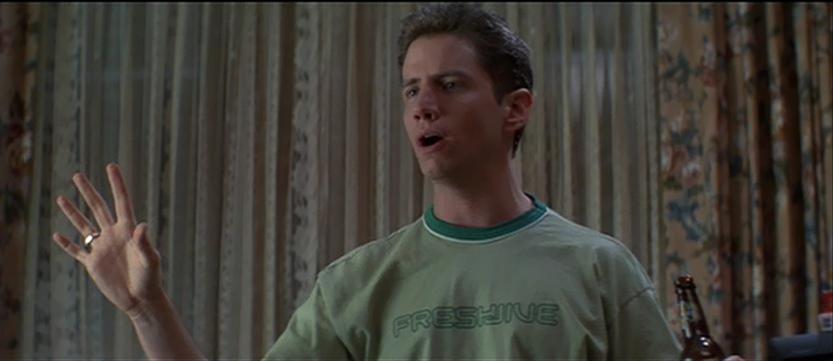
Not Pictured: Martin Freeman from the UK version of the Office and the Lord of the Rings movies


In the movie, he plays eternal-virgin Randy—a video-store, horror-movie obsessive with his own horror movie “rules”—broken one-by-one, almost the second he voices them.Unlike the Lillard, Jamie goes on to survive for the sequels, where he offers up even more goofball Lillard-isms. 

One line in particular I remember being quoted at my middle school for the better part of a year--the line where the ghostface killer asks Jamie Kennedy what his favorite scary movie is and Jamie Kennedy says: "Showgirls." I don't know why, at that age, we thought it was funny to abuse kind-of-funny one-liners from movie trailers, but that was definitely one that got abused.


4.      Seth Green

Matthew Lillard may be the original Lillard, but Seth Green takes the cake for playing, not one, but two Lillard roles during this period. The first: in Can’t Hardly Wait, where he plays Kenny Fisher—a white kid from a predominately white area trying to act like a black rapper. The character might have been source material for fellow-Lillard, Jamie Kennedy’s Malibu’s Most Wanted, since they’re pretty much the same character. 

Lillard Historians take note: this is what a Lillard looks like (the quirky glasses, late-90's fashion sensibility, pocket chain and crazy hair). Shaggy for the Gen-X/Gen-Y in-betweeners.


The second Lillard role was in Idle Hands, in which Green played “funny, stoner guy zombie-friend” to Devon Sawa. 


Green’s character in the movie is notable for crossing that line that no other movies featuring Lilllard characters crossed: in the movie, Green smoked weed—the fourth wall for Lillards. While the other Lillards on this list owe a lot of their quirk to Lillard prototype, Jeff Spicoli, none of them are shown smoking weed—nor is it suggested that they smoke weed. They follow the Shaggy Principle: Shaggy was obviously a dooby-smokin’ tweaker, but they never explicitly admit that in the cartoon. Green’s character in Idle Hands broke that rule—at a time when the Lillard was on its way out. 

So, maybe it’s safe to say Green destroyed the Lillard in the same way that that new country song, “If ICould Have a Beer With Jesus" destroyed country. What is there left to say or do when you make a song that explicitly says what country music has been about (drinking beer and Jesus) since country music has been country music? Similarly, where can the Lillard character be taken once you’ve explicitly made him what everyone suspected he was: a goofy, on-the-cusp-of-the-21st-century reincarnation of Jeff Spicoli. It’d be like an episode of Scooby Doo, in which Shaggy is shown puff-puff-passing with Scoob and Thelma is shown twenty years in the future as a sexually-repressed, spinster librarian.

So, thanks, Seth Green. Without you, the Lillard thing might have gone too far. It might have been taken where most tropes and franchises go to die: in space!
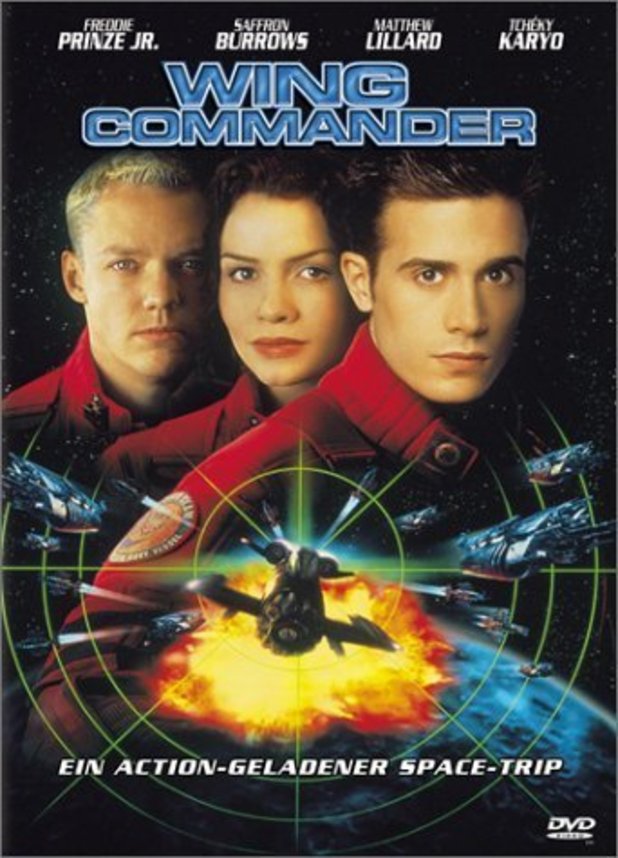

Goddam it. Never mind.

Sunday, December 2, 2012

Sober Sunday Reflections on..the DEVIL


I watched End of Days recently—a movie I haven’t seen since my salad days of eighth-grade. While I didn’t remember much from my initial viewing of the film, I remembered the basic premise and, more importantly, why it appealed to my dark and depraved eighth grade mind: it’s about the devil.

For some reason, movies, books (but not music, so much) about the devil have appealed to me because, growing up in a bible-thumping red state, the devil is the one thing no one talks about…along with all the other things that get equated with the devil in a red state: rock music (excluding anything written before grunge and after black people ceded the genre to dorky white guys doing piss-poor imitations of black people), homosexuality, and…anything else not promoted on a network that screams “socialism” and end-of-times prophecy at people.

But, the purpose of this article is not political. I instead want to focus on the very thing that attracted me to movies like End of Days, the Exorcist, the Omen, et. al, when I was but a mouth-breathing 14 year-old—and how I always seem to be disappointed by the movie-version of Lucifer compared to the more badass version of Lucifer in my head (not that I spend my days fantasizing about the devil… I just have a preconceived notion of Lucifer—who, if you’re going to use as a character in your movie, should measure up to his status as the greatest supernatural evil ever--that is rarely matched by the Hollywood version). More to the point: these are the things that irritate me about devil-movies—the four unspoken but universal rules that all devil-movies seem to follow.

1.    The Vulgar Display of Power Principle

In End of Days, Gabriel Byrne’s Dark Prince can do just about anything he wants. He can kiss a man’s wife in a crowded restaurant (and feel her up at the same time!), while the man watches on—silenced by the fierce death-stare of Byrne. He can then blow up that restaurant in classic action-movie fashion by walking away and not looking back at the explosion—which in this case, kind of makes sense: why would the devil wan to look back at some boring old building that’s on fire and gloat over his work when he lives in an eternal house of flames? He can also make heads explode on command. But one thing he can’t do is kill Arnold Schwarzenegger. Well, he could. But the devil, while maybe not all-knowing, at least knows that killing Arnold Schwarzenegger would mean a shorter film—and to the audience, that means less stuff “gettin’ blowed-up,” less Arnold-mangled English, and less weird, mom-and-daughter-plus-Satan incest sex scenes. So, at least we can thank Satan for that. 


 "Thanks, Satan!"


But this begs the question: if Satan can do all this awesome stuff at will, why can’t he do the very thing he needs to do to get his way? In this case, killing Arnold would mean he gets to bang that chick from Empire Records, thus impregnating her with Rosemary’s proverbial baby and setting up the “end of days.” All he has to do is kill Arnold—which shouldn’t be hard. Sure, the guy is stacked and he could probably fist-butcher the skull of any human like he mouth-butchers the English language, but…come on: You’re Satan! You make people’s faces explode and blow up buildings for no reason. And now you have a reason to do these evil things--because some gap-toothed Austrian is cock-blocking you from realizing biblical prophecy. What gives, Lucy?


 Arnold: Cock-Blocking Democrats and Satan Since 1999.


What “gives” is the Vulgar Display of Power Principle—first addressed in the Exorcist, likely as a way to close up the one major plot-hole in all movies about the devil. In the scene, Father Damien is talking to Regan—a twelve year-old possessed by the devil. She is strapped to a bed, with cuts all over her face and green ooze leaking out of every recognized—and some new—face orifice—kind of like what you’d imagine to be the aftermath of a blind man trying to eat split-pea soup with a pocket knife. After Regan professes to be the devil, Father Damien asks her: “If you’re the devil. why can’t you make those straps disappear?” To which Regan/Satan retorts: “Much too vulgar a display of power.”

True, Satan can do some nether-worldly shit, but his one (self-imposed, I guess?) condition is that he has to be classy about it. It’s ok to do evil, but to do evil when expected to do evil is just pompous and in bad taste. Because if there's one thing we know about Satan, he's very conscious of general etiquette and not being "too vulgar." A little vulgar. Sure. But there's a line, here, and Satan is very careful not to cross it--lest people think he's an asshole.

It’s the same rule that applies to superheroes: they’re only allowed so much super-natural awesomeness. Superman can fly. The Hulk can…get real angry and bash and bang and break things. But too much awesomeness and they’re just being assholes. Well, that and there wouldn’t be a “story” if they could easily avoid the conflicts they find themselves in. 

 "I wonder if I wasn't a tad too show-y when I blew that restaurant up full of innocent civilians. I don't want anyone to get the wrong idea."


2.      The Devil Shall Be Played By the Least Devilish-looking Actor Possible

Before the CGI boom, actors had to play parts that can now be rendered in unbelievable CGI. And when I say unbelievable, I don’t mean unbelievable because it’s so good. I mean: unbelievable in the sense that you can’t believe the egregiously bad computer-generated crappy monsters you’re expected to believe exist in the same reality as…things that are real. 

Looking at YOU, Joss Whedon!

But I digress. In a lot of movies about the devil, the King of Hell (that's one of his pseudonym's, right?) is given a face. In End of Days, he was played by Gabriel Byrne—whose credits include Miller’s Crossing and…well, other stuff, I’m sure. In the Devil’s Advocate, the devil is played by Al Pacino. In the Exorcist, the devil possesses the body—and, by extension, face—of a little Linda Blair.

But in all these movies, there is one glaring problem: none of these people look even remotely evil. Al Pacino could be devilish—if by “devilish” you mean “devilishly handsome,” as my mom—and many a mom—will certainly concede. Gabriel Byrne is another mom-ready heartthrob. And Linda Blair….Actually, Linda Blair works because she looks (or did look, when the Exorcist was shot) like a pretty average-looking kid and part of the creepiness comes from her being so normal and so…possessed by Satan. It’s a terrifying contrast of extremes: ultimate evil vs. ultimate innocence signified by Blair’s ultimate average-looking kiddi-ness.

Pictured: Linda Blair in a rare Puberty Affects Everyone PSA from the 1970's

But let’s say you wanted to make your own movie about Satan. Wouldn’t it make more sense to cast a cracked-out Gary Busey—someone who already looks evil by way of always looking batshit insane? Or (how do I put this delicately?) someone with less mom-appeal than Byrne or Pacino? Someone whose inherent “grotesque” features already lend themselves to the part? Steve Buscemi, perhaps? No disrespect to Buscemi, but…come on, tell me Steve Buscemi as the devil wouldn’t be the best thing you ever saw?

I’m not complaining, per se. I get it: it’s interesting to see the devil characterized as a suave dude who could probably make your mom run away with him just by accidently making eye-contact with her (and is there anything more evil than mom-stealing?). But it’s tired and it’s played-out. I want a devil who my mom wouldn’t bone. A devil who makes my mom’s ovaries (did I really just type that?) shrivel up in disgust at the sight of his ugly, devil face. And I know Steve Buscemi is right for the part because every time my mom sees him on television, she averts her eyes, choking back something physical—instant infertility perhaps?-- that happens to moms when they see the opposite of Al Pacino. “Ugh,” she says. “That guy….”

 "Moms hate me....I must be evil."

3.       The Guy We’re Supposed to Root For Shall Always Be Wrestling With His Faith

This trope isn’t exclusively anchored to devil-movies. Signs did it. Patch Adams did it. And it was the premise of every episode of Touched By An Angel. What happens is this: the main character is usually a pretty devout believer in God—until something horrible happens (more often than not: the protagonist’s family dies) which causes the main character to abruptly turn on his heels and refute everything he previously stood for. In Signs, Mel Gibson used to be a preacher. Then his wife died. In the Exorcist, Father Damien is a priest. But his mom dies. In End of Days, Arnold Schwarzenegger’s wife and daughter die. They never address whether or not he was an atheist before this happened, but he does say that he doesn’t believe in God now (when the film takes place) because of it.

Obviously, losing a family member—or all of them—is pretty tragic. And it probably leads one to question a lot of things—including their religious or non-religious convictions. The thing that irritates me, though, is that after this happens, the character is exposed to all forms of super-natural fucked-up-ed-ness but still refuses to acknowledge that anything is out of the ordinary. In the Exorcist, Father Damien watches Regan turn into a blistering mess of puke and evil, able to move furniture at will or write cryptic messages in her stomach while her arms are bound. And…he still doesn’t think any of it is real. 

Pictured: the face of a man who is absolutely sure what he's just witnessed is all hocus-pocus.

There’s a scene in End of Days, towards the end, where Arnold takes the girl (Satan’s intended) to a church where he learns she will be protected—because Satan apparently can’t enter the church. Never mind for a minute that Arnold's character doesn’t believe in God—so why would he believe in Satan?—he’s still on-board with the whole safe-from-Satan-in-a-Church thing. A priest then explains to Arnold why all the strange shit that’s been happening since he got involved with this case (did I mention Arnold is a cop in this movie?) is happening—to which Arnold retorts, in one of the more unintentionally funny (with his trademark emphasis on the wrong part of a sentence) lines in the movie, “cut the religious mumbo jumbo.”

I call this: the Scully and Mulder effect. In the show the X-Files, Scully and Mulder played opposites. Mulder was the die-hard JFK, fringe-conspiracy fanatic who was ready, before even embarking on a case, to say aliens were the culprit. No matter what happened: aliens. Scully, on the other hand, played off Mulder’s childlike willingness to “believe” by playing the role of a douche-skeptic: outright refusing to believe in anything supernatural or alien-related, despite seeing supernatural, alien-related phenomena in the week’s previous episode, every week. So, either she was just being a turdy contrarian or she suffered from the worst case of one-week amnesia. Something bizarre would happen and Mulder would be all like: “Aliens, Scully. Aliens!” And Scully was all: “That’s insane, Mulder. I know we encounter aliens in every episode—and, sure, I've seen them first-hand—but--no, just--no, that’s patently ridiculous.” 

 "Right. Aliens exist just like I've been wearing the same pant-suit since Season 1. Get over yourself, Mulder...."

To be fair, the best way to create dramatic tension (the most obvious way, anyway) is to make compelling characters who disagree with each other—or two characters who represent two polar opposite extremes. This worked for the X-Files. Because—hey, it’s TV. Who cares? But I expect a little more out of my devil-movies. 

But I really shouldn’t expect much from devil-movies, because…

4.       Most Devil-Movies Suck

That’s right, I said it. devil-movies suck. And I don’t mean they suck because they don’t get good reviews or because they don’t look, behave or act like movies that don’t suck. They just flat-out…suck.

Sure, End of Days has its entertaining parts. And the Devil’s Advocate has Charlize Theron nude. And Stigmata…had Billy Corgan do the soundtrack. But, most of the time, these movies are just…kind of boring.

I’m of the Quentin Tarantino school-of-thought when it comes to movies that suck. Paraphrasing here, but: “There is no such thing as a bad movie. It’s either entertaining or it’s not.” Unfortunately, for so many movies about the devil, they fall into the latter category—either because of the exhausted tropes (the crisis of faith thing, uninspired characterization of the devil as a suave dude you’re mom would bone) or because—and I don’t know why this seems to always be the case with horror films—the plot is too convoluted and not at all fleshed-out in a way to hold anyone’s interest. 

 "Mmm. Genius tastes yummy."

If you’re going to write a movie about a character who represents absolute evil, at least make it…kind of interesting. Don’t just dilly-dally with plot-points that, no matter how much you try to make them make sense (one primary reason for the convolution), don’t make sense, so you have to keep trying to explain them, just digging yourself deeper and deeper into that unholy wormhole. We know he’s the Devil. And that’s all we need to know. He’s going to do some evil.

To quote Arnold, “cut the mumbo jumbo”—since most of it (as with End of Days) revolves around taking biblical quotes out of context and trying to make them make sense within the context of the film (which never really works). We get it: the Devil has his reasons for doing evil. And I have my reasons for wanting to see someone do evil in movies. But by taking time out to explain to me something I already know (that the Devil is evil) is just delaying what I really came to see: the random head-explosions and fiery boom-booms.

That said: the Exorcist is the exception to this rule.